Skip to content

Posts tagged ‘Fajance’

Bangholm Keramik Denmark

Bangholm Keramik Denmark

Bangholm Pottery started operation in 1948 in Skodstrup, near Aarhus Denmark, by Knud Nielsen and his father (also a potter).

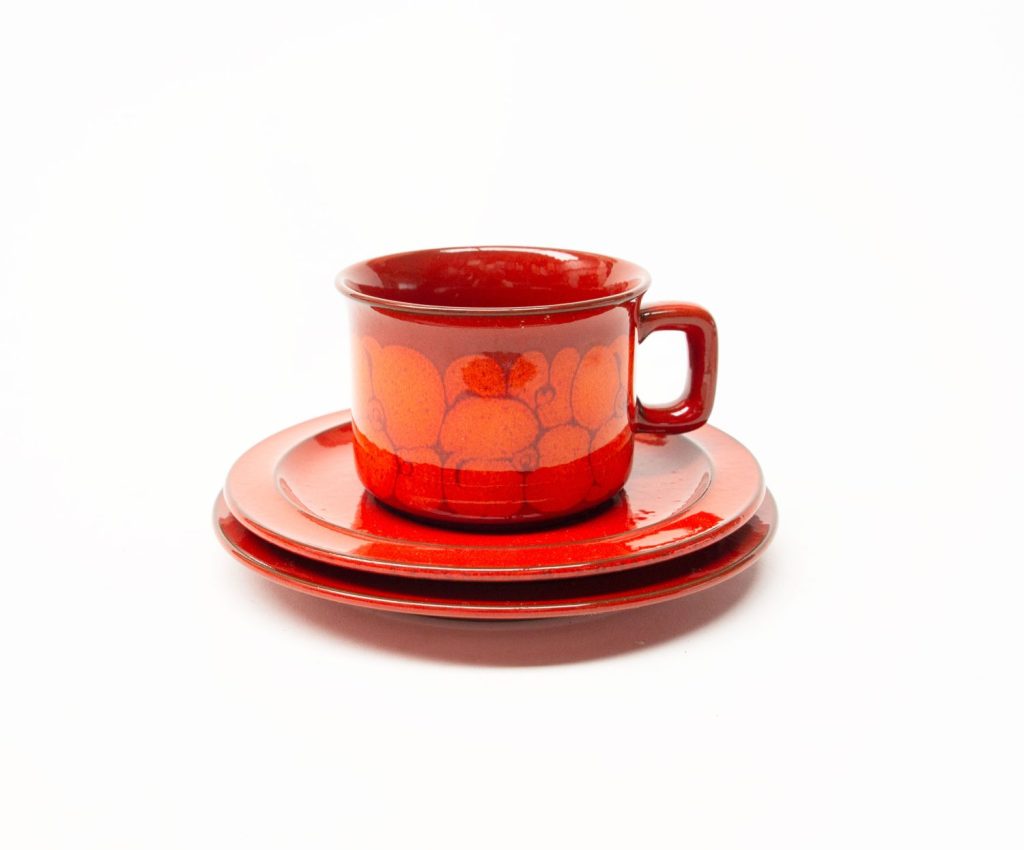
The types of wares consisted mainly of domestic and utilitarian items for the home. It reached the height of popularity in the 1950s and 1960s, and became known for its’s colourful striped fajance glazed terracotta pottery which has continued in popularity on the secondary market.

The business was eventually taken over by Iben Scott Lundby, a close friend of the family. Iben had started with Bangholm in 1969 as a trainee who qualified as a potter in 1973.  Iben worked with Bangholm from until 1990 when she took over the pottery. In 1998 the pottery was moved to nearby Ebeltoft. Here the focus was more on unique and one-off ceramics.

Bangholm Pottery in later years evolved into a different business, still run by Iben Scott Lundby….which as at 2023 appears to be no longer operating or have a website. The quote below is from the website of Scott Lundby when the business was operating when this article was originally published in 2017.

“My name Iben Scott Lundby. I was skilled as potter in 1973 in the family business  ”Bangholm Keramik”. After education I continued in the pottery with throwing and painting until 1991. Here I took over the business after my parents, who have had a long and exciting life as potters.

The next 8 years, I continued this business with serial production and wholesale of Bangholm Keramik for shops primarily in Denmark, Norway and Sweden. Gradually the throwing and decoration work began to drain the physics, and by the millennium, I decided to move the company to Ebeltoft, where the focus should be more unique work, smaller production, and only with retail sale from my own store.

After a short time in Ebeltoft, I  succeeded in taking over a smaller property on Adelgade 4 in Ebeltoft, near the city’s small and famous old town hall. Here we got a good business location for our store supplied with a workshop building, which allowed organization of a slightly more intimate ceramic atelier for the throwing and painting work.

Now this business has evolved into a lifestyle store with retail sales of jewelry, womenswear, accessories, shoes, and handicrafts. More recently we have completed the physical store with this webshop as a natural additional sales channel.Today we enjoy a fantastic feedback from our customers, which gives us faith in a good development of our business”

Most of the pottery you will find by Bangholm is earthenware-terracotta, with a white tin glaze base – and coloured overglaze. Otherwise referred to as Fajance or Faience. Occasionally I have seen unglazed or partly glazed pieces, but not often.

The images below (except for the impressed backstamp) are all taken by me –  you may find them much copied and mis-attibuted around the web – but most are from my original post on Bangholm Pottery on Blogger in 2011, and 2 later posts.

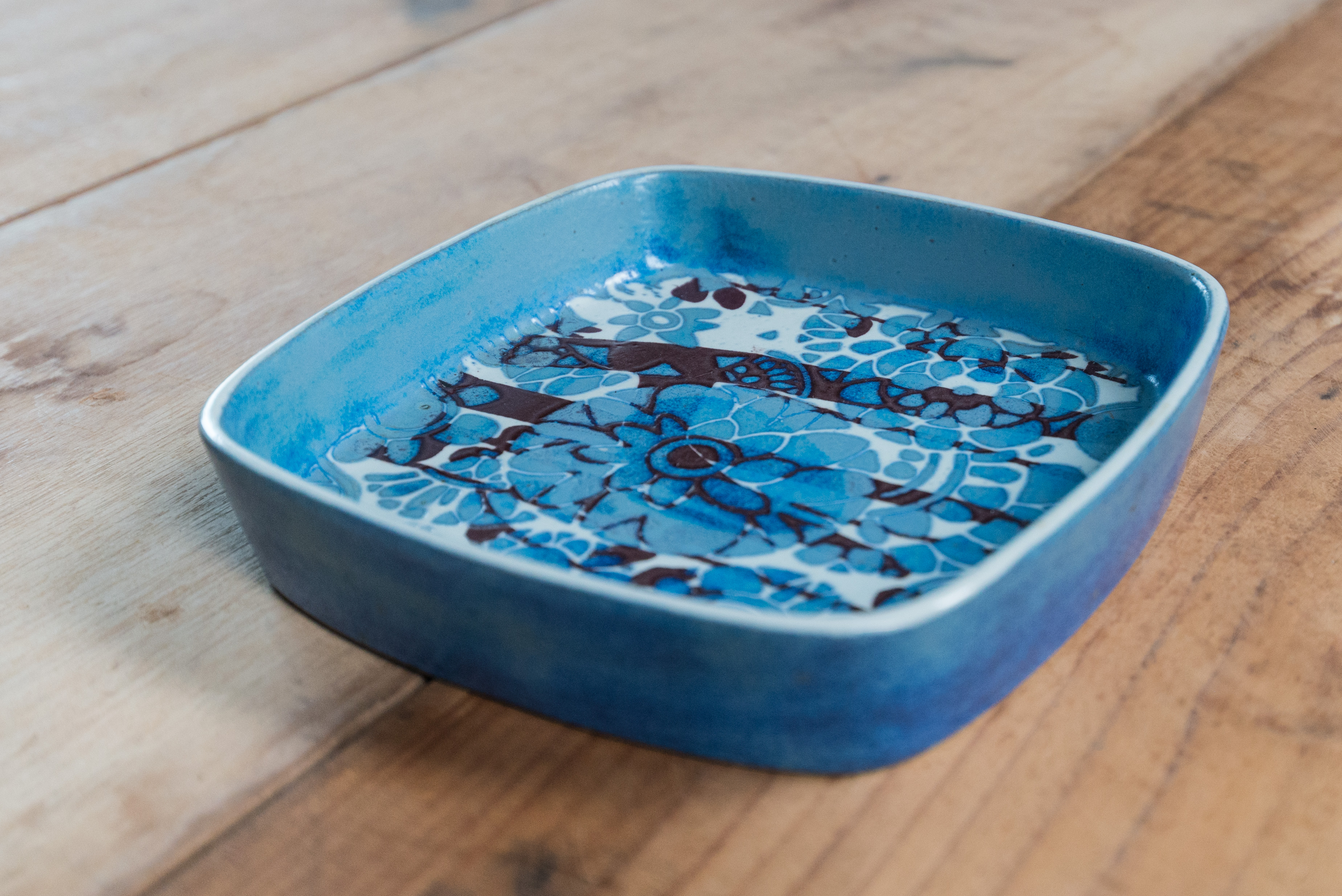
Bangholm Denmark Bowl and Plate with Striped Glaze
Bangholm Denmark Terrine
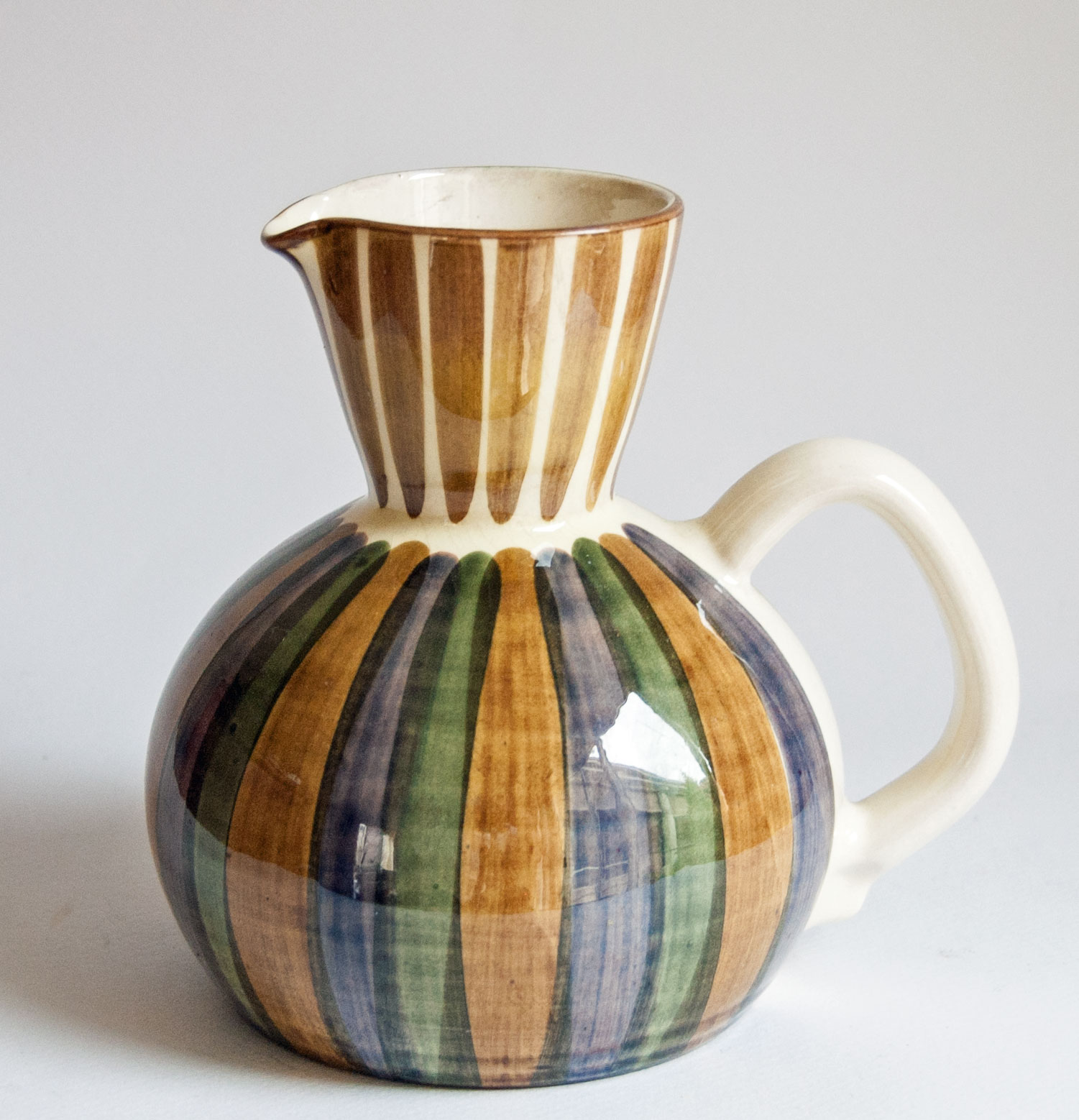
Bangholm Denmark, Striped Ewer Form

There are 2 known signatures – one a hand-painted script, and the other an impressed stamp – which I presume is later.

Bangholm Denmark Signature
Bangholm Denmark, Impressed Stamp Via "silottesdk" on Etsy
Bangholm Denmark, Impressed Stamp Via “silottesdk” on Etsy
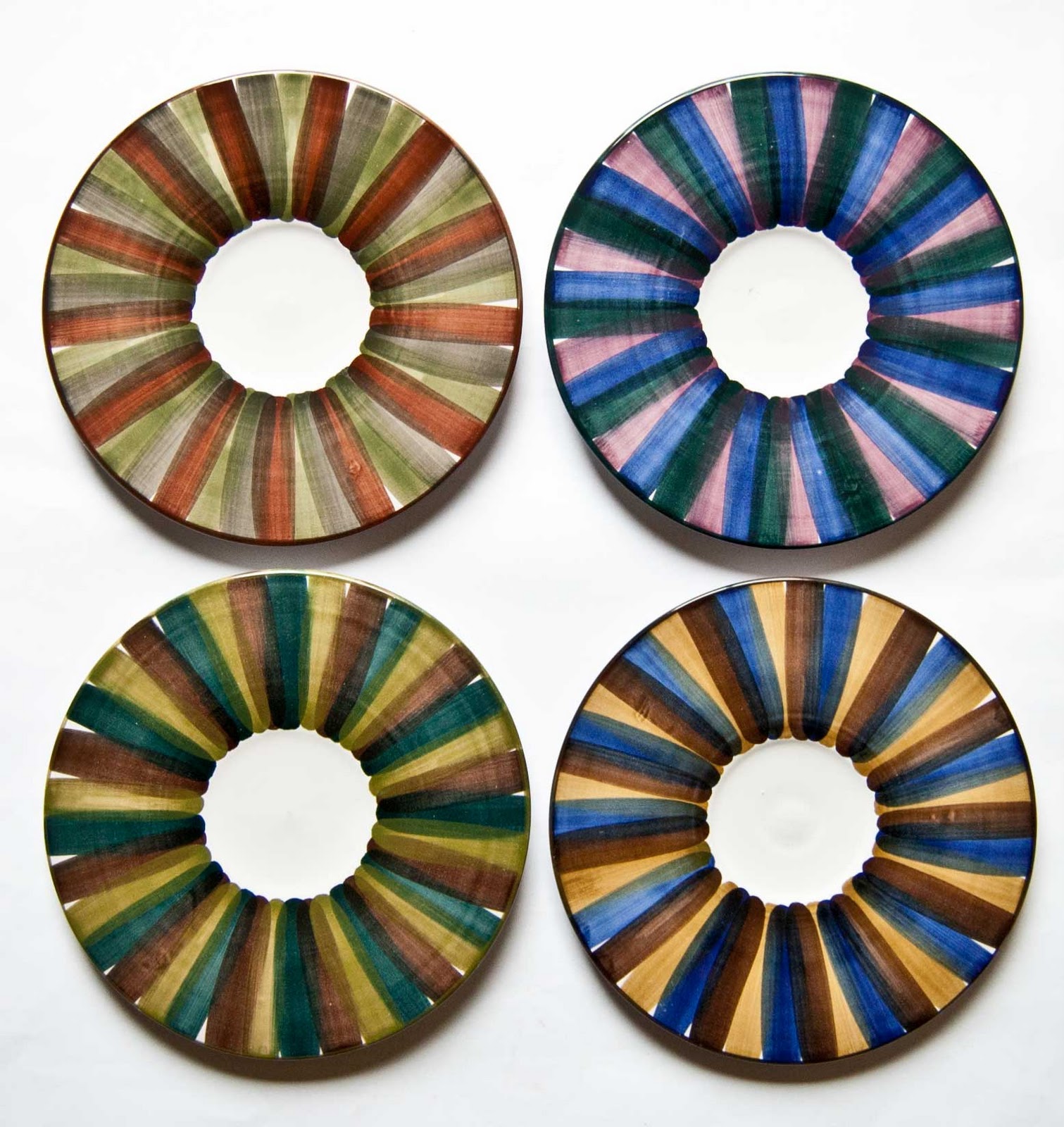
Bangholm Plate Stripe Patterns
Bangholm Denmark, Plates with striped Patterns – a much copied image around the WWW.

Royal Copenhagen Baca, Shape 3266

I never knew this shape existed until I came across it recently. This tiny little Royal Copenhagen lidded box is from the very popular BACA fajance series in the 1960s. Pieces from this series have become real collectors items, and its easy to see why.

The design is number 711, on shape 3266 – a box measuring a tiny 4.5cm square x 3cm high.

Nils Thorsson designed all the forms for this series, and the 711 pattern on this piece is his design as well.

It has proved to be one of most popular patterns of the BACA series with its lovely textured glaze of green, white and blue hues; and each piece turning out slightly different because of the method of glazing Nils Thorsson developed for this series.

Royal Copenhagen 711/3266

Royal Copenhagen 711/3266

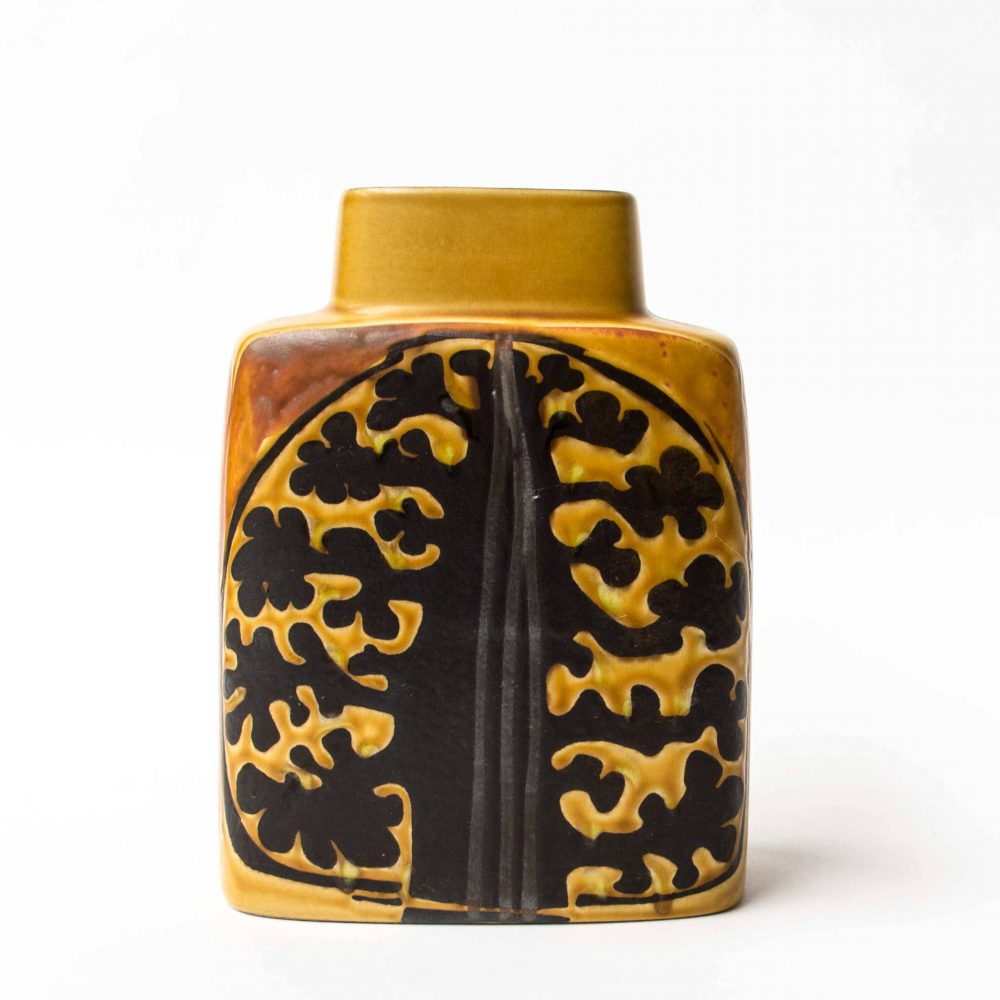
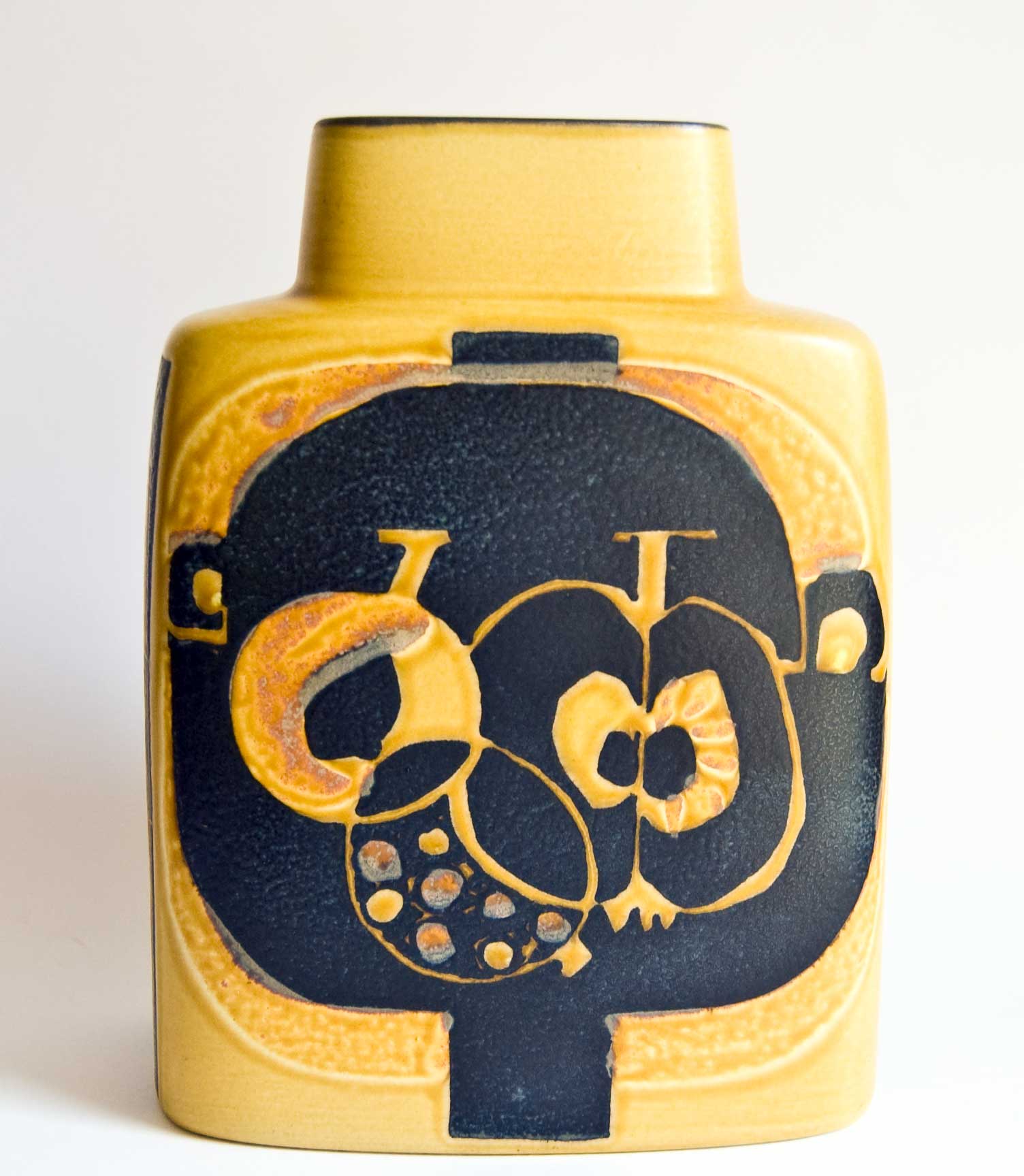
The other form this 711 pattern is seen on is the series of 3 various sized square bottle forms like the one below…..but I have yet to see it on any other forms with pattern 711 except for the bottle and small box form…..If you know of any others I would love to see them.

Royal Copenhagen Pattern 711, Nils Thorsson

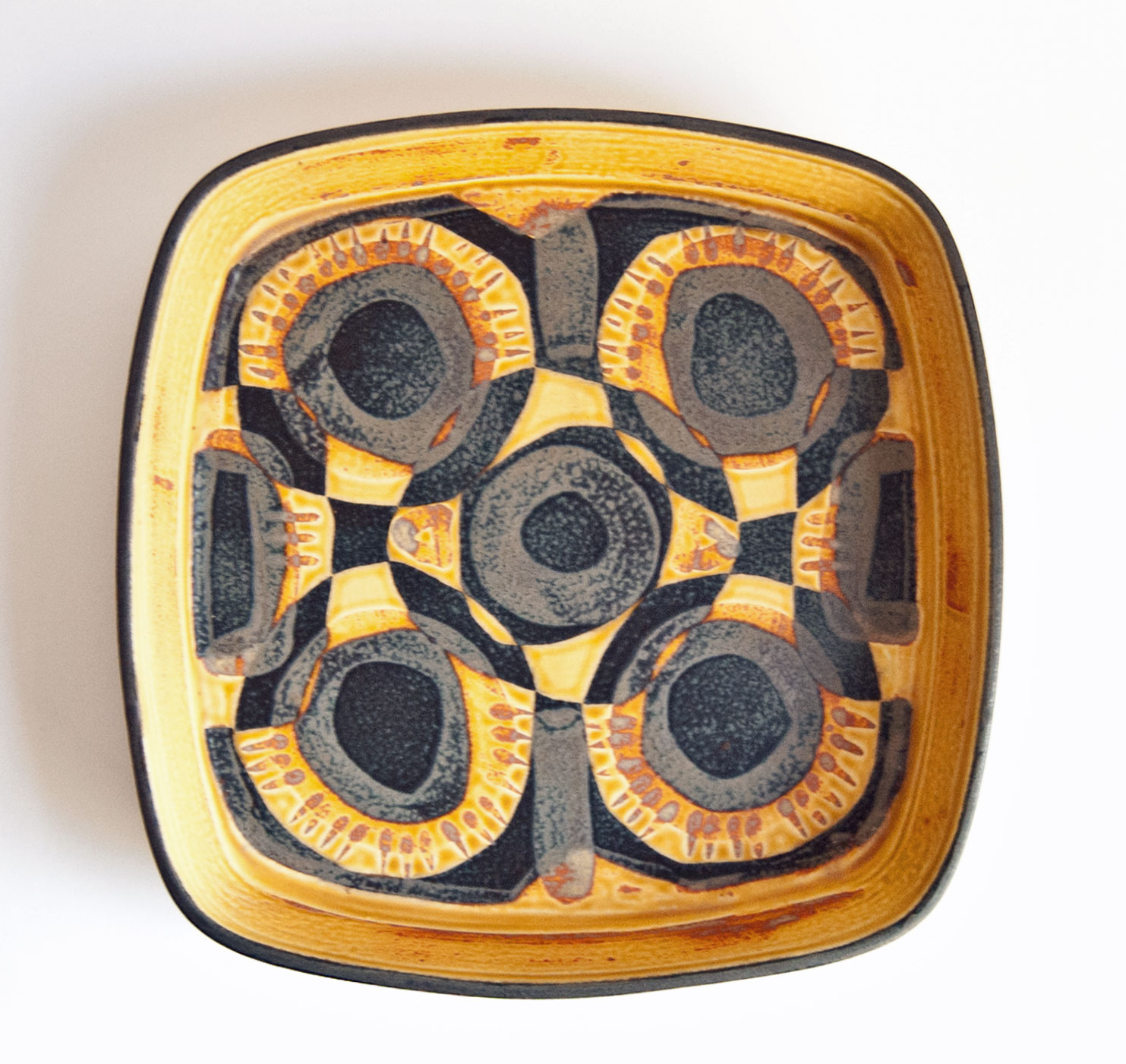
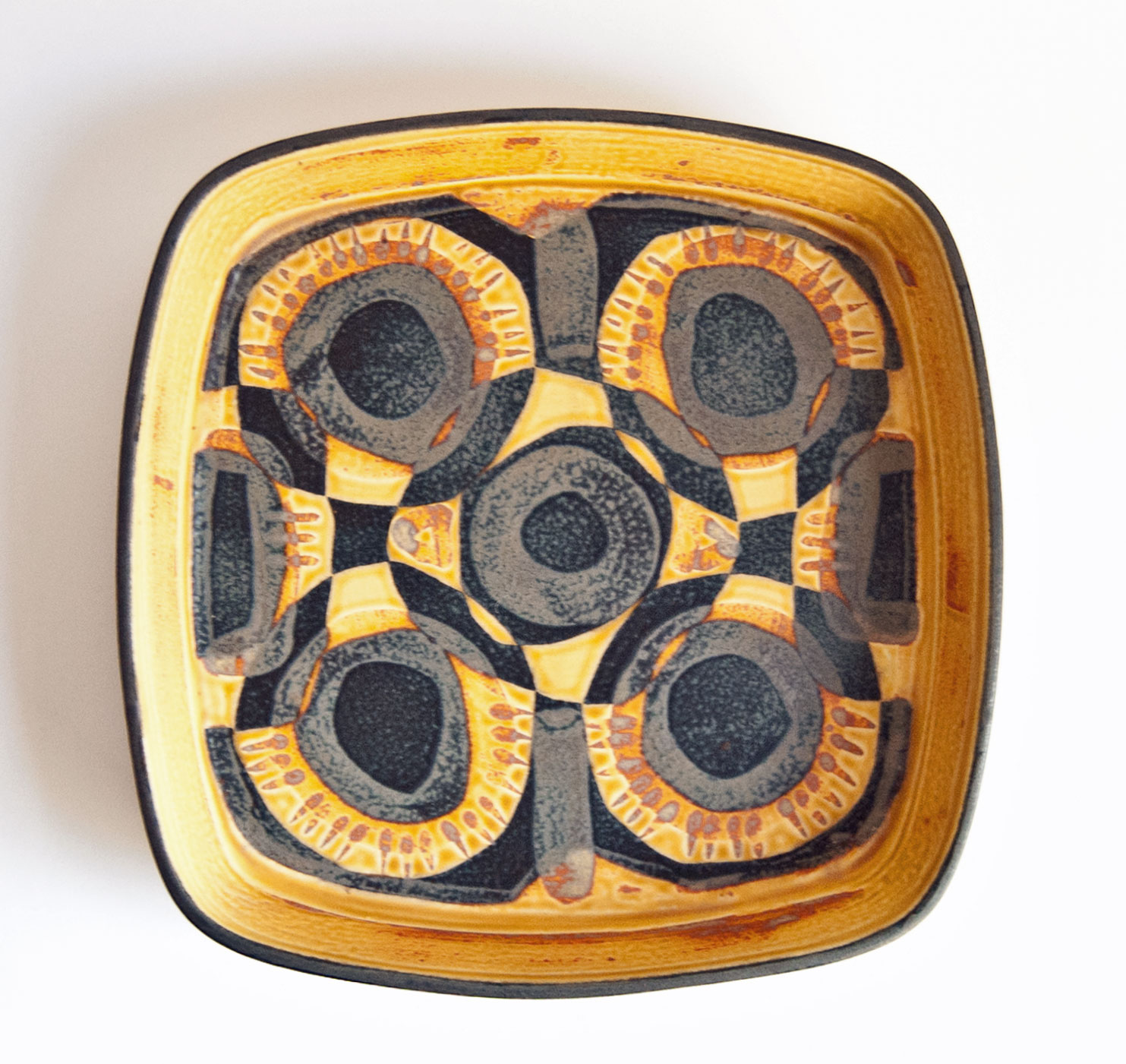
Royal Copenhagen, Johanne Gerber Designs

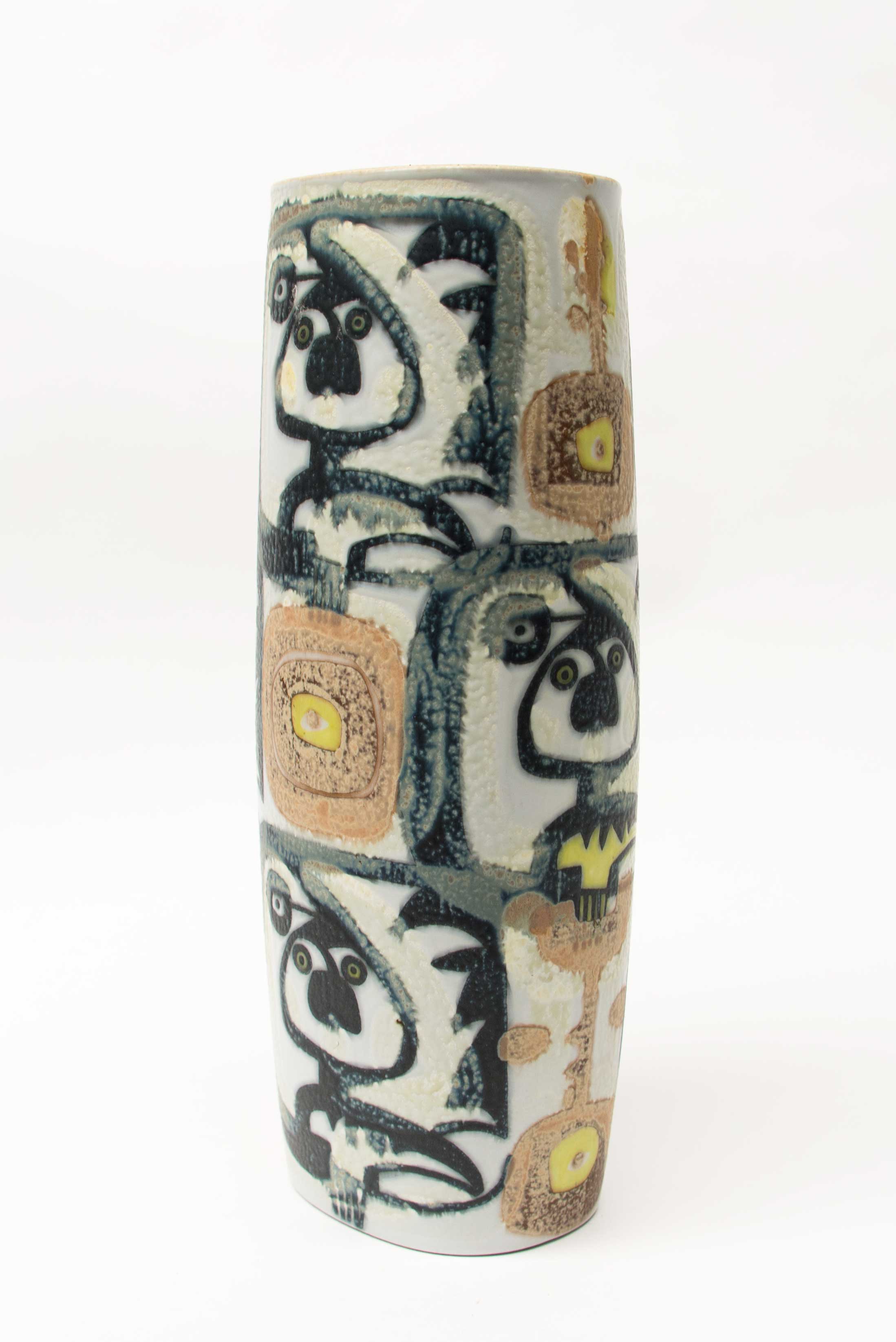
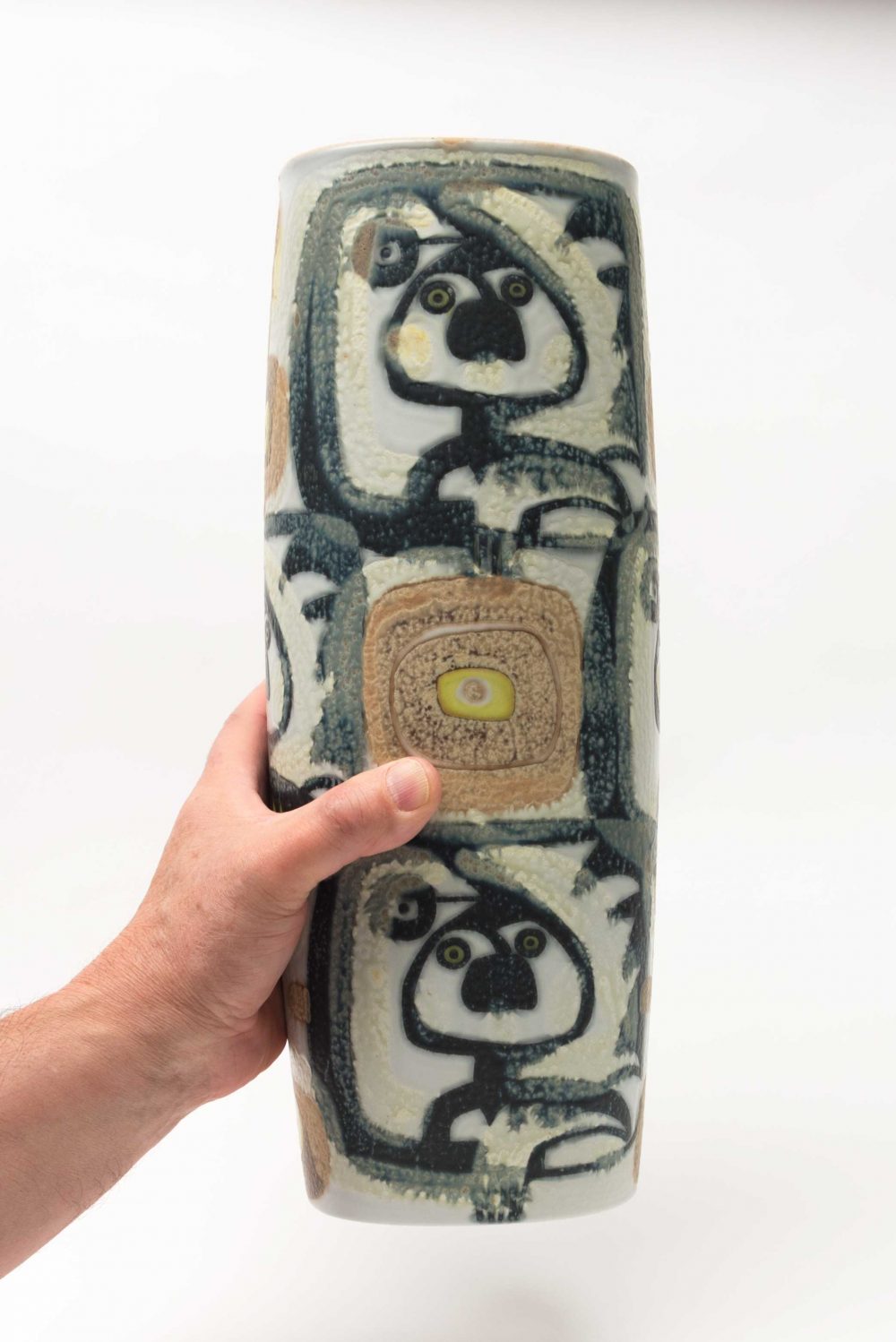
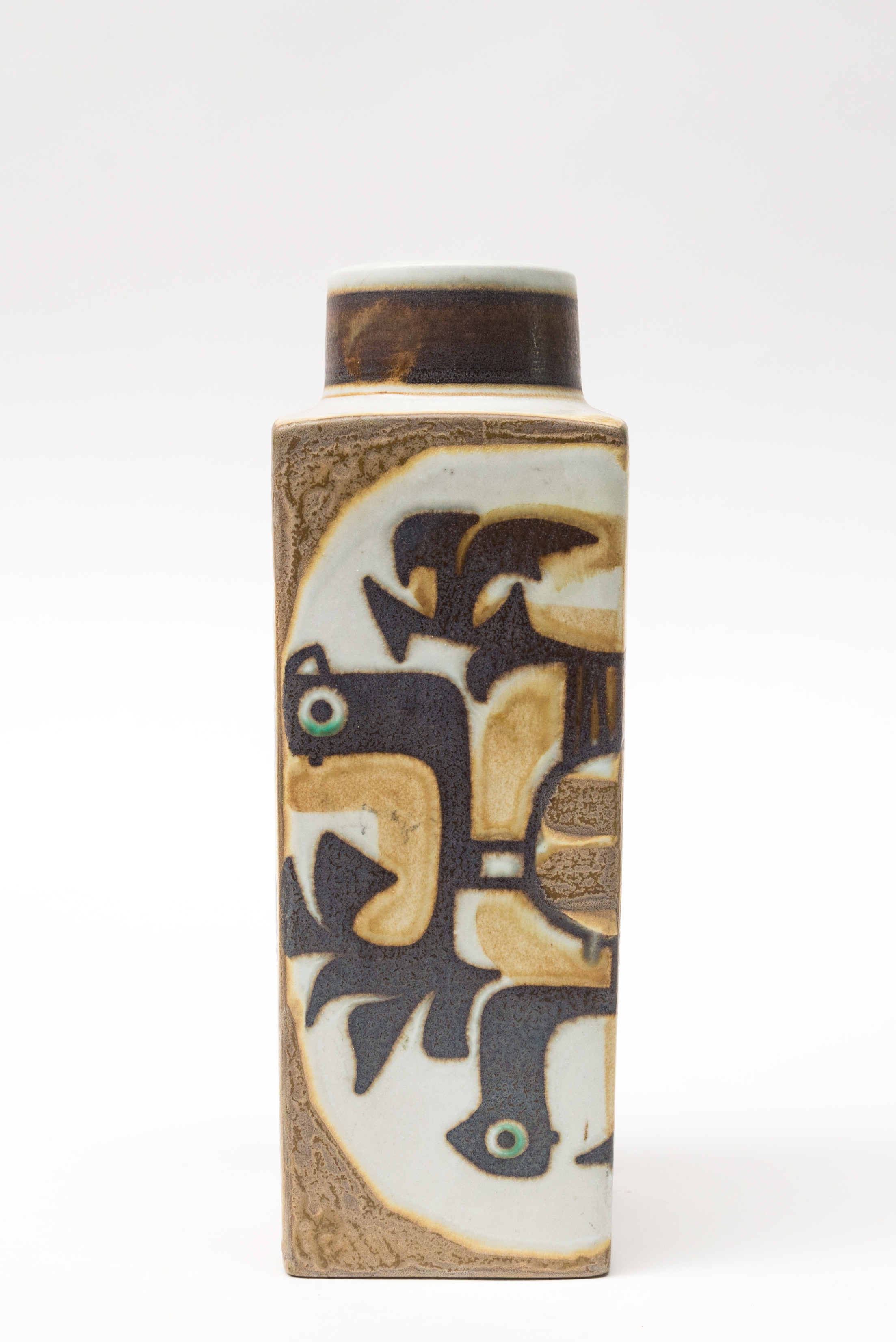
The first design here is just so impressive and powerful…and It shouts Mid Century Modern. I have only come across it on this large form (no. 3101) which is 36cm tall. Of course it is from Royal Copenhagen and is a design by Johanne Gerber as part of the BACA series at Royal Copenhagen in the 1960s.

Johanne was one of a group of designers and artists under the direction of Nils Thorsson. This group included Berte Jessen, Marianne Johnson, Ellen Malmer, Kari Christensen, Beth Breyen and Grete Helland-Hansen, Johanne(s) Gerber, Anne Marie Trolle and Ivan Weiss.

Most of the forms were design by Nils Thorsson, but Ellen Malmer also designed about 14 of the forms.

A glazing technique was developed by Nils so that each piece turned out slightly differently, giving them a hand-crafted, hand painted appearance due to the nature of the glaze.

The designs of each of the artists/pattern designers is very different. I think the designs of Johanne Gerber are amongst the boldest – often featuring strong contrasting colours as in this example, and often with complex layering of patterns and textures. All of Johanne’s designs have quite a painterly quality – and often remind me of mid 20th century abstract and expressionist painting.

Royal Copenhagen, Johanne Gerber