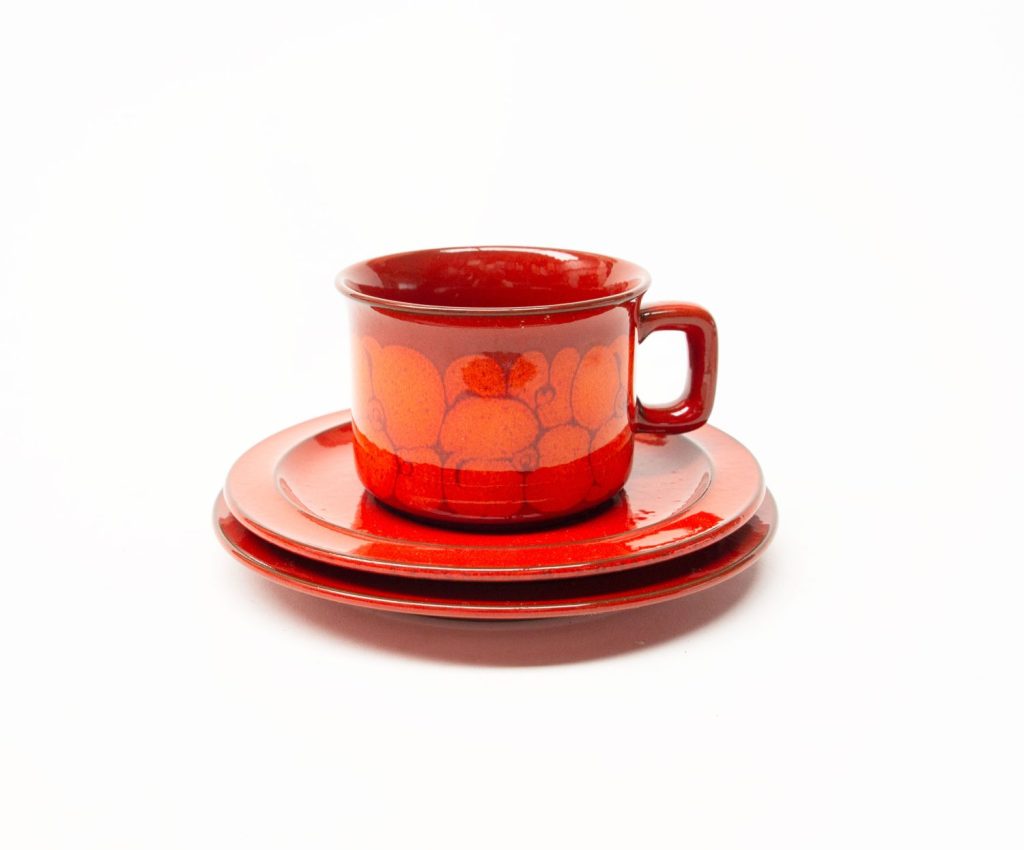
Wax resist on pottery is a technique whereby wax is used to prevent glazes or slips from adhering onto the clay body or previous coating of glaze when a second or third layer is applied. The wax “resists” the second glaze from adhering, allowing the painted design to show. Japanese potters call the technique “Ronuki”
The technique often results in glaze beading of the overlayed colour, which adds to the decorative effect of the technique. Beautiful effects are possible with the combining of glazes. Especially where a dark glaze is the first glaze applied, then painting a wax design and follow by applying a lighter coloured glaze.
Some of my favourite wax resist pieces were made by Australian Studio Potter Phyl Dunn (1915-1999). (Phyl is the correct spelling, and how she signed her pieces)
Her glazes from this period have the most beautiful silky smooth texture, and display a fresh experimental approach to the use of colour and pattern. They are usually very simple pieces where it can be seen she was experimenting with Calligraphy as a design.
After formal training in London in 1954-1955, Phyl returned to Australia in 1956, marrying Studio Potter Reg Preston in 1958. At this time also “Potters Cottage” was established. Potters Cottage was a co-operative founded in Warrandyte in 1958 for the purpose making and selling handmade Australian pottery.
The five founding members from 1958 were Reg Preston, Phyl Dunn, Artec Halpern, Gus McLaren and Charles Wilton; Their shared idealistic belief that modern, handmade pottery could enhance the quality of contemporary life was central to their philosophy.
In the 2 earthenware pieces by Phyl Dunn below from the same period, (early 1960’s) the use of colour is beautifully restrained. Phyl was also a very competent colourist, and combining this skill with wax resist, seems to add a freshness which wasnt present in much of the “heavy” studio pottery of this period.
In 1967 she moved from earthenware pottery to stoneware, and in 1982 Phyl and Reg set up a studio in Woolamai in Victoria, where she worked until 1987. I think these early wax resist pieces by Phyl are amongst her best work however.

Phyl Dunn, Wax Resist Design Jug
Read more