Denby Harlequin
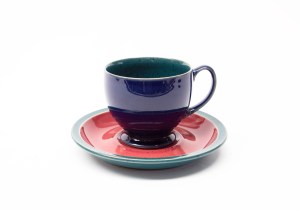
Denby Harlequin is quite an uncommon design here in Australia.
It was introduced in by Denby in 1992 and produced until around 2004 – so it just makes it onto this site of 20th Century ceramics 🙂
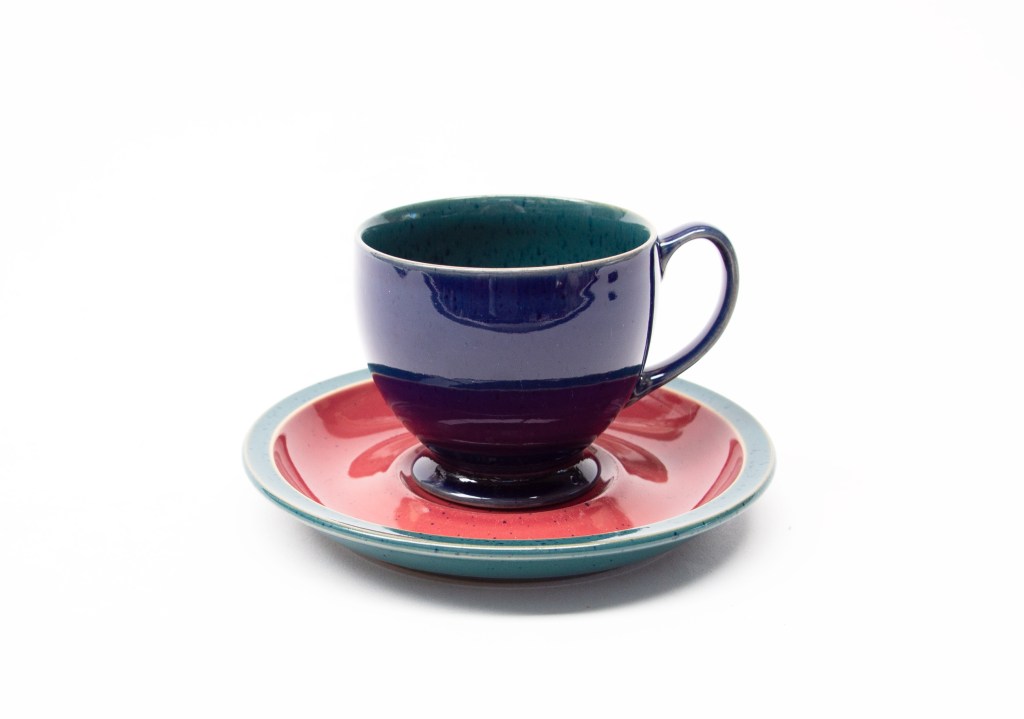
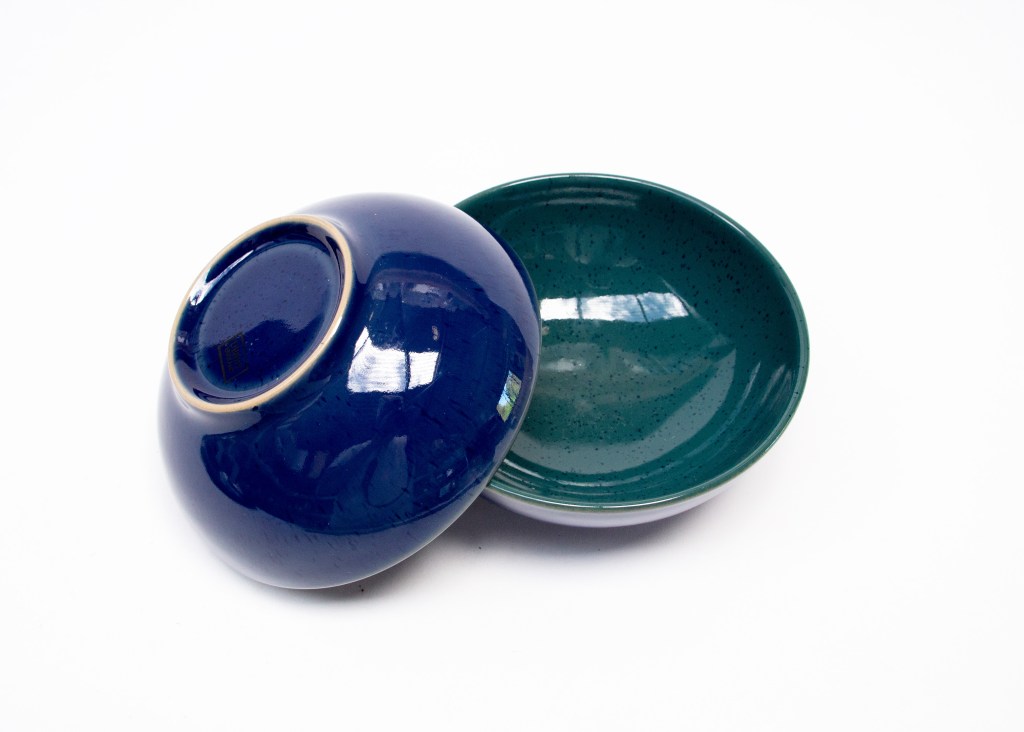
Designed by Richard Eaton the colours were combinations of crimson, deep blue and turquoise green.
It has a highly glossy, semi transparent glaze with lovely darker iron flecks throughout. I think this iron fleck gives it that “hand crafted” appearance in the Denby stoneware tradition, and lifts the design considerably making it more interesting than would at first appear from the distance.
The pieces are “mix and match”, creating a wide range of possible variations for pieces which matches the post modern vibe of the era.
Richard Eaton joined Denby in the early 1990s and is still the Design Director at Denby (2023). The Harlequin design was one of the first to use computer aided technology in its design.
Richard Eaton was responsible for the introduction of Computer Aided Design at Denby, and Denby was the first company to install a system in 1992. In the authoritative book Denby Pottery 1809-1997 (Hopwood 1997), Richard is quoted about how computer aided design assists, not replaces designers.
“Having computer aided design system in the studio has not radically changed the overall way that we design, we still use whatever the best tool is for the job in question, whether it be hand painting a pot to see a glaze effect or throwing a pot on the potters wheel through to sketching ideas and developing them through computer assisted design, any process or tool is at the disposal of the design department to create a new design in shape, colour and pattern.
The benefits of using a computer has certainly enable us to develop and review more designs both quickly and with more conviction as it is now possible, and easier, to make earlier design decisions that will affect a designs development. Now we have the ability to show a 3D object either on the screen or on paper it is easier to present new ideas for product development whether be internally or to a potential customer”
The design process however remains the same – the designer needs the vision which can be made into a piece of pottery using a number of tools – one of which is the use of computer software to draw and model and objects.


 C20Ceramics