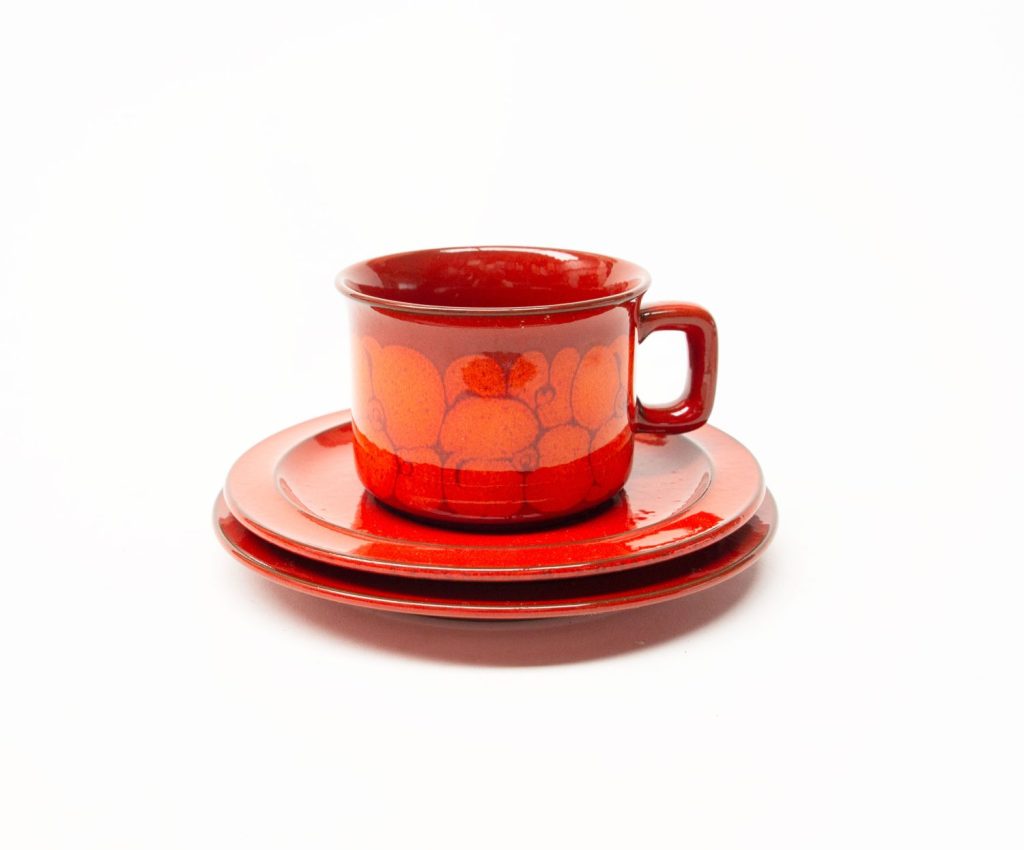
Georg Ilya Chapoff, A 20th Century Potter’s work who you will rarely come across, but which I find captivating. The image below is the only example of his work I have come across, and I haven’t been able to find any other examples online, in libraries or periodical magazines of the time.
Ilja Chapoff (b1912 Novorossijsk, Russia – d 1989 Australia). Was a talented craftsman who worked as a Potter, Painter and Carver/Sculptor (of both marble and wood). He worked in New South Wales and the A.C.T. (Canberra)…and taught classes in Sculpture in the Canberra region. I am guessing he immigrated to Australia around WW2.
I was able to find only 1 record of an exhibition he was involved in at the Society of Arts & Crafts of N.S.W in 1974 – but there were no images. His name is listed on the Australian Artists database, but that goes no further.
What an all round talent this man was. I love the style of the pattern on this stoneware piece pictured here – obviously a reference to Russian Easter Egg designs which Ilja would have known so well.
If any readers ever come across any information, or a piece by this Artist, please contact me, as I would love to see it and build up some sort of visual library of this work, before it slips from our history.
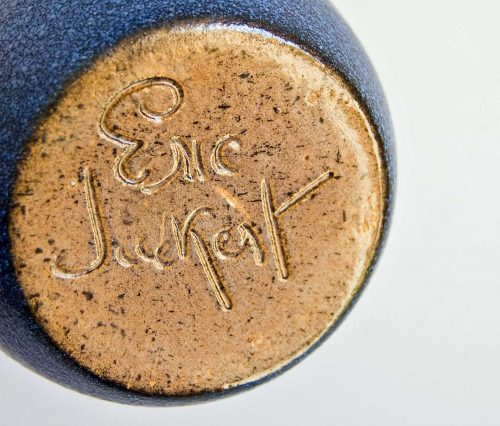
Eric Juckert was a prolific Australian Studio & Commercial Potter and Artist/Painter who had studied with Una Deerborn in South Yarra, Melbourne. He worked as a potter and painter from around 1949 to 1992 in Victoria. His pottery was also sold by the department stores Myer and David Jones under the trade name “Jacqueline”.
It is worth reading a well researched biography on his life on the Australian “Rameking” blog HERE . A selection of his work showing the wide variety of styles he produced can also be seen at the local museum in Cowes, Victoria.
Juckert was a highly skilled potter, and well respected amongst his peers both nationally and internationally. I especially love his use of expert use of glaze colourants and surface texture. Even the smoothest of his glazes have a luxurious, tactile quality about them.
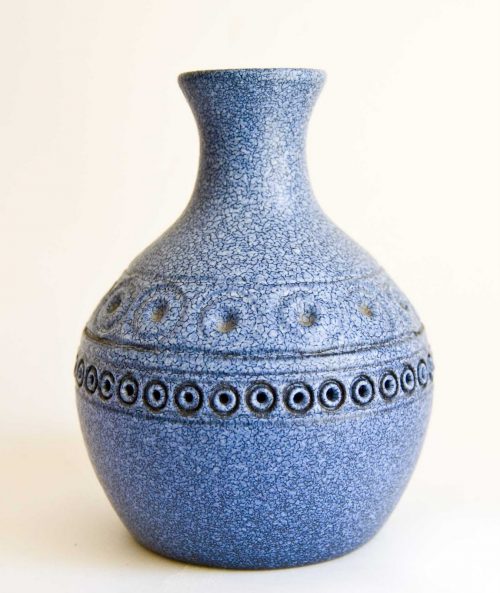
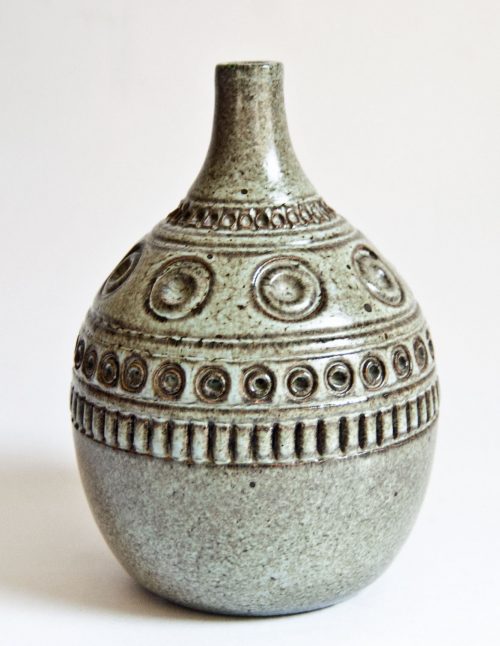
The pieces you will probably come across most often by Juckert in Australia are the small bottles with impressed circle designs, and the white “splatter” glaze commercial ware.
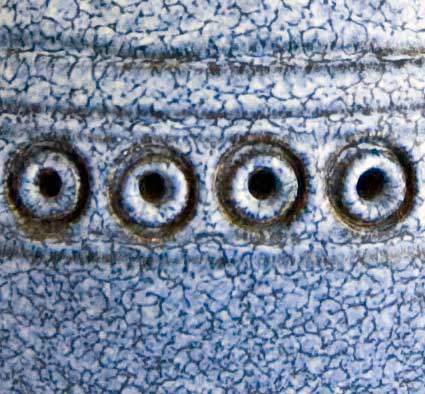
Eric Juckert Bud Vase with impressed circles and crackle glaze
Eric Juckert – Bud Vase with impressed design
Eric Juckert – Bud Vase, Manganese Glaze, Impressed Circle Design
Løvemose was a pottery in the town of Kædeby on the island of Langeland in central Denmark, run by husband and wife team Marie Hansen (d. 2008) and Johannes Hansen (d. 2003).
It started in 1942 and ran until the mid 1980’s. It was of a reasonable size with up to 15 staff working there at its peak, and very popular with tourists, especially after building of the Langeland bridge in 1962.
In recent years pottery by Løvemose has gained a whole new audience, as the pottery has been “re-discovered”, previously being looked down upon by many people as only producing “tourist ware”. As more of the pottery has come onto the secondary market people are now realising the quality of this pottery.
A huge range of work and styles that came out of Løvemose Pottery, and there are pieces that are up there with the best of 20th Century Danish studio pottery.
One of most popular and most collectable designs currently is “Graasten” (meaning Grey Stone, but also the name of a town in southern Denmark which is the location of the Royal summer residence). It has a similar feel about it to “Amazonas” from BR Pottery Denmark. The rustic but refined style of it is popular currently with many contemporary potters.
I also like the heavily carved and textured pieces from Lovemose. Carved designs similar to these are the ones you will come across most often, and are probably the ones which were often sold to the tourist market.
Løvemose is nearly always stamped to the base of each piece, although depending on the clay used it can be obscured or difficult to read sometimes. If you are lucky you will find one with the orignal label still.
Lovemose Denmark, Yellow Stoneware VaseLøvemose Denmark, Stoneware Vase with original label.
One of the most beautiful pieces of Lovemose I have come across is the very large stoneware bowl below, which has the most intriguing metallic lustre on a fascinating “crawling” glaze.
Løvemose Denmark, Stoneware Bowl with Metallic LustreDetail -Løvemose Denmark, Stoneware Bowl with Metallic Lustre
While a lot of pieces from Lovemose are in natural colours – they also produced many pieces with brightly coloured glazes – blues, reds, yellows etc.