Skip to content

Ivan Rabuzin for Rosenthal

Ivan Rabuzin ( 1921 – 2008) was a Croatian naive artist, with little formal training, who is said to have been one of the greatest naive style painters of our time. His work gives us a “vision of an eternal spring, untouched, heavenly nature and light with gentle pastel colours and poetic compositions that become a vision of Heaven on Earth” (From the Ivan Rabuzin website) 

In 1976 Rabuzin was engaged by Rosenthal to create a number of  “Art at the Table” designs for their Studio Line series. The shapes or forms these designs were placed onto were series by Hans Theo Baumann, Timo Sarpaneva, and Ambrogio Pozzi…..(I would be interested to know if there are more)

I recently came across one of Rabuzin’s most popular designs he created for Rosenthal Studio Line, called “Moj Dom” – in production 1986-1987.

The design is on a series of forms known as “Duo” by Italian designer Ambrogio Pozzi. The tall elegant vase with the Moj Dom design nicely displays Rabuzin’s style in its muted pastel hues, and a gentle and idealised composition which suits the Pozzi vase form so well. 

The design was a part large dinner service with many components, plus decor accessories. 

Rosenthal - Moj Dom, Ivan Rabuzin.

Rosenthal – Moj Dom, Ivan Rabuzin. Photo Ray Garrod

Rosenthal - Moj Dom, Ivan Rabuzin.

Rosenthal – Moj Dom, Ivan Rabuzin. Coffee Pot – Photo via Paulus Porcelain

Read more

Aksini Denmark

Aksini pottery Denmark is something I come across from time to time. The name comes from shortening of the name of designer Aksel Sigvald Nielsen. (b1910-d1989) who started up his own pottery in 1954 with his son, after working at Knabstrup Pottery from 1929 to 1954.

The pottery produced a wide range of mainly domestic wares, but it is the biomorphic, black and white sculptural forms that are probably the stand out designs from this pottery.

I also like the pieces from Aksini with  coloured cross hatching designs as seen below. The pottery was mainly fajance decorated earthenware, but you can find stoneware pieces from time to time. I haven’t been able to find out when the pottery closed, but probably late 1980s.

You can see a photo of Aksel in his pottery on the Danish Arkiv website here

Aksini Denmark

Aksini Denmark Biomorphic Vase – Photo Ray Garrod

Aksini Denmark

Aksini Denmark Photo via “zowivintage” etsy

Aksini Denmark

Aksini Denmark m Photo via “danishdims” etsy

Aksini Denmark

Aksini Denmark m Photo via “danishdims” etsy

Aksini Pottery also produced decorative domestic ware, and recently I discovered the interesting items below. They are salt and pepper shakers, one has “Pebermø” on the back and the other “Pebersvend”. Apparently these terms are old Danish language for “Spinster or Old Maid” and the male equivalent .

Aksini Denmark Salt & Pepper

Aksini Denmark Salt & Pepper – Photo Ray Garrod

Aksini Denmark Salt & Pepper

Aksini Denmark Salt & Pepper – Photo Ray Garrod

Aksini Denmark Salt & Pepper

Aksini Denmark Salt & Pepper – Photo Ray Garrod

Aksini Denmark Salt & Pepper

Aksini Denmark Salt & Pepper

Holbaek Museum in Denmark holds some of Nielsen’s original sketches from his time at Knapstrup, but they are no longer available online sadly, and neither is the wonderful resource that was Knabtrup-specialst in Denmark that had a thorough history of Knabstrup Pottery, its designers and a catalogue of items produced at Knabstrup. On that topic, so much important historical information which was available on the net just 3- 5 years ago has not been retained or maintained and a lot of history is sadly being lost. Even many of the major makers of pottery with proud, important and long histories have removed historical references from their website, and now produce websites that focus purely on advertising, glamour, and sales, and the “dumbing down” of the importance of their history into a few lines if at all…it’s sad to see how much is being lost, especially since a lot of it is not recorded in books or other hard documents. Aksini ware is often hand signed as below, but stamped logos were also used later on.

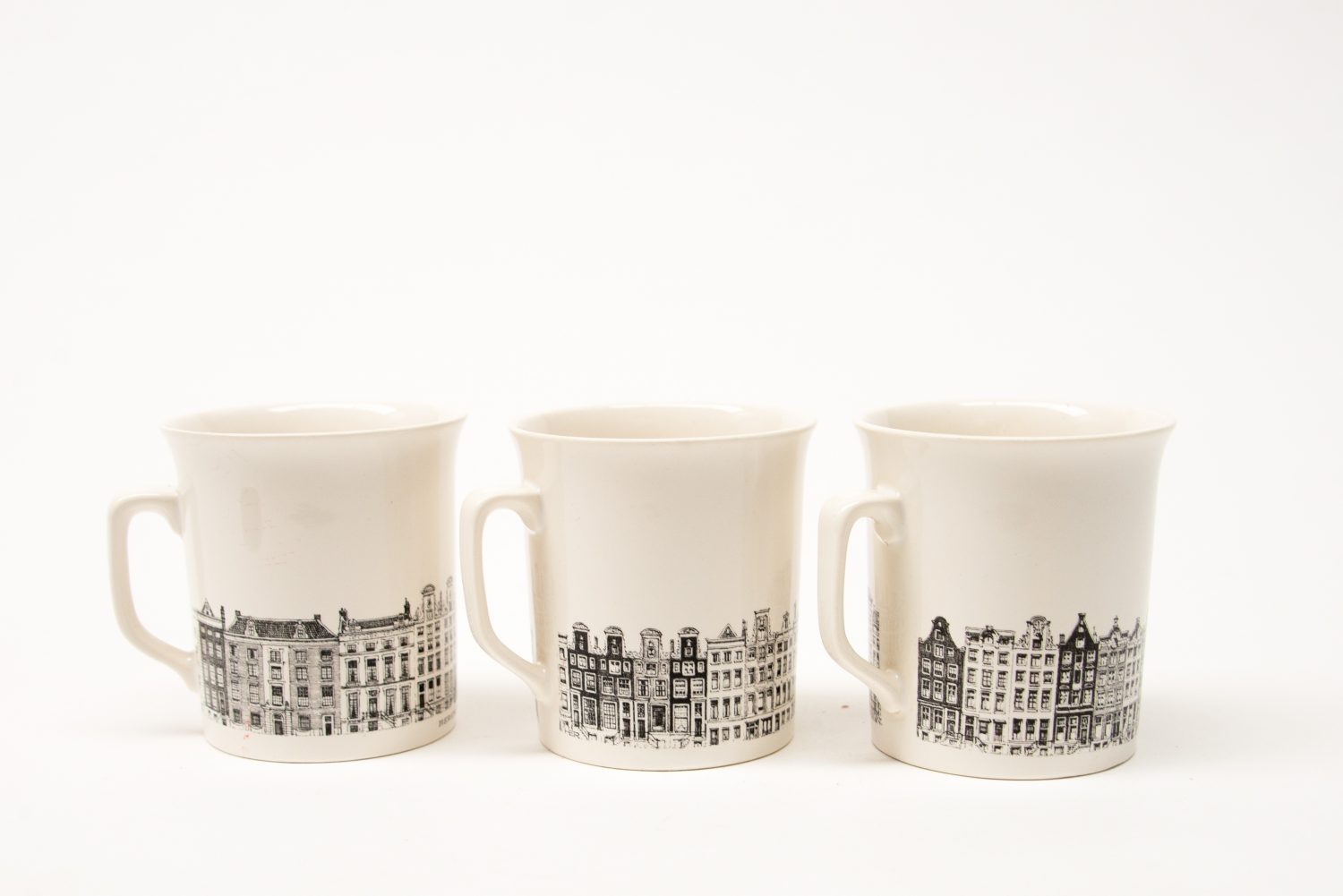
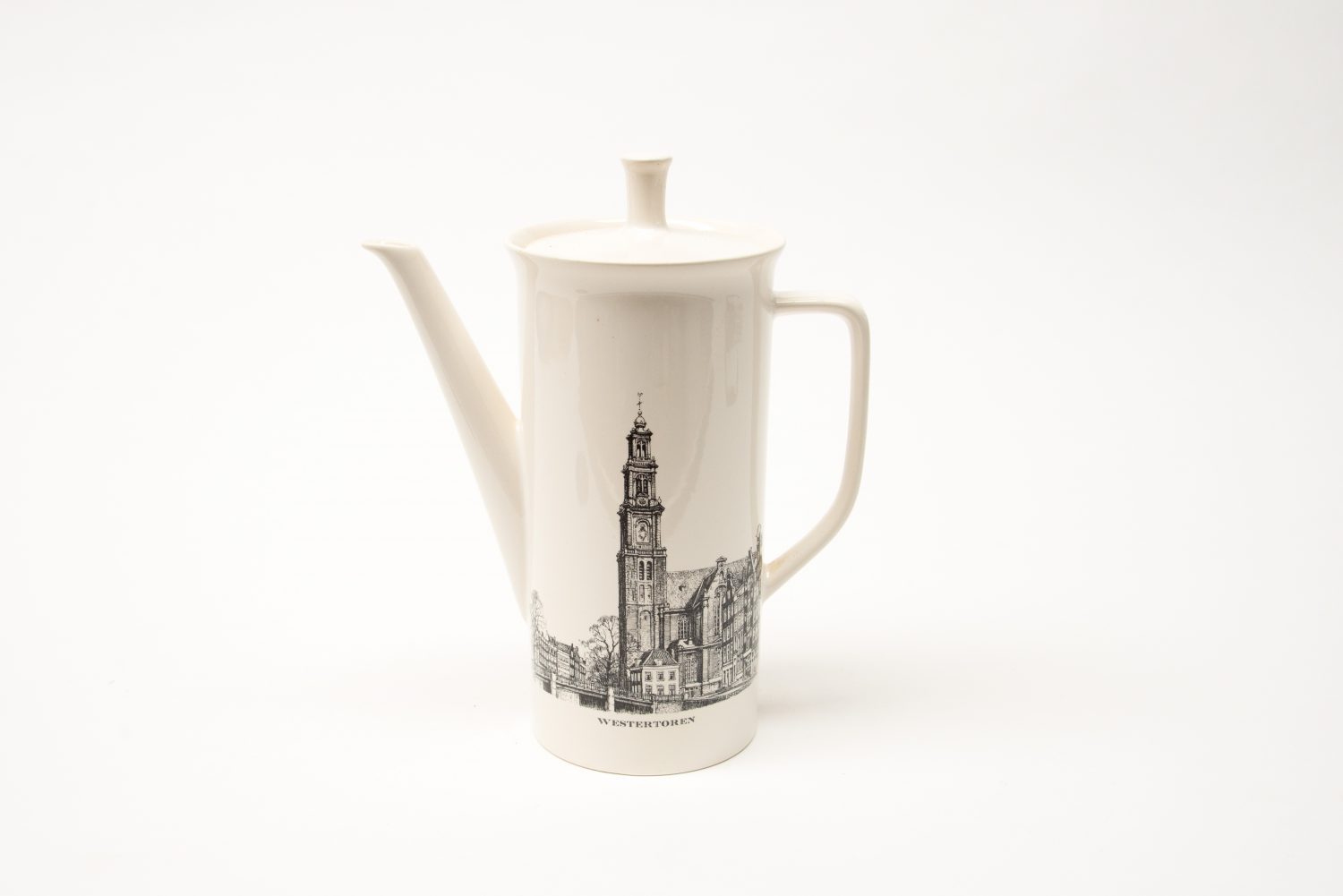
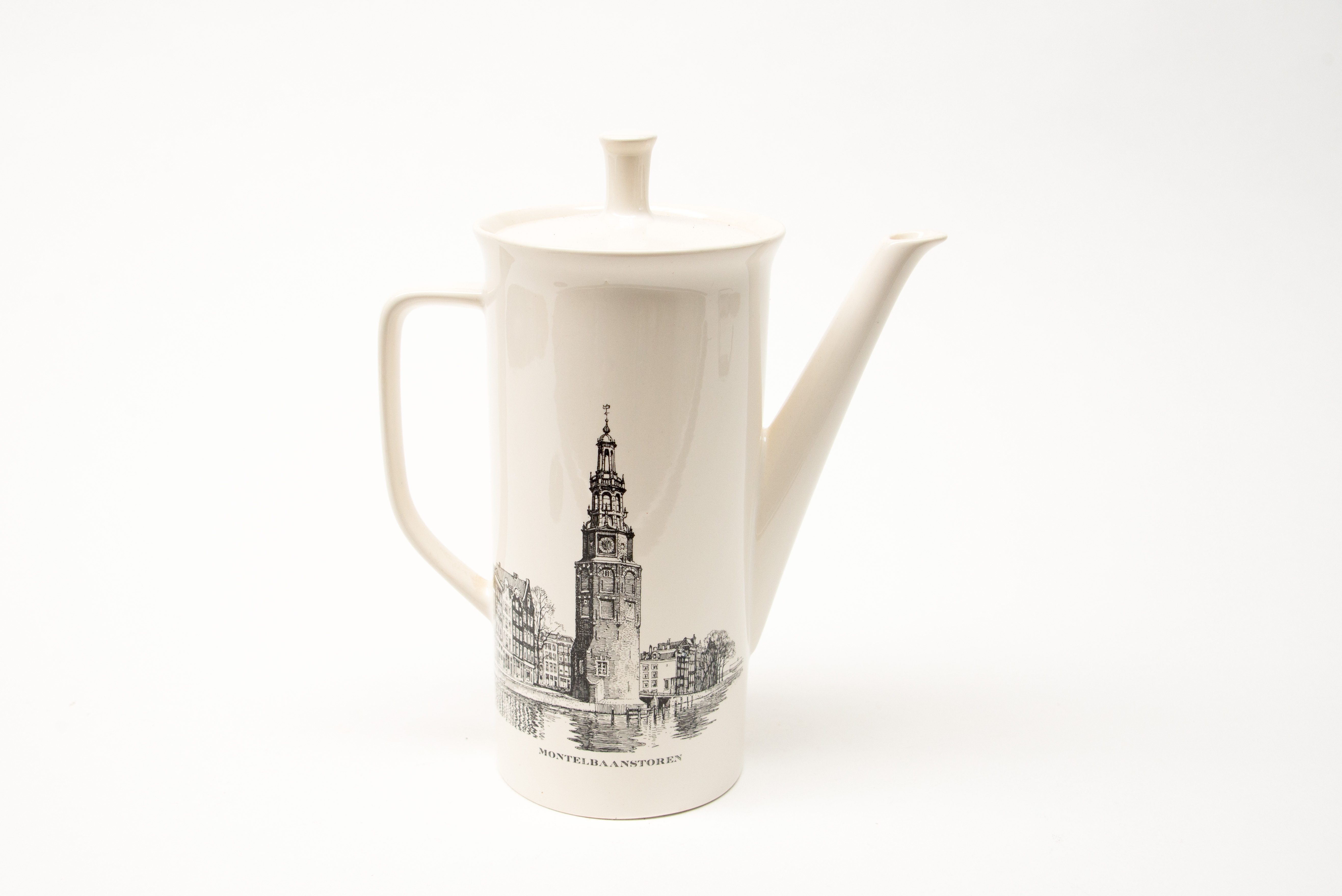
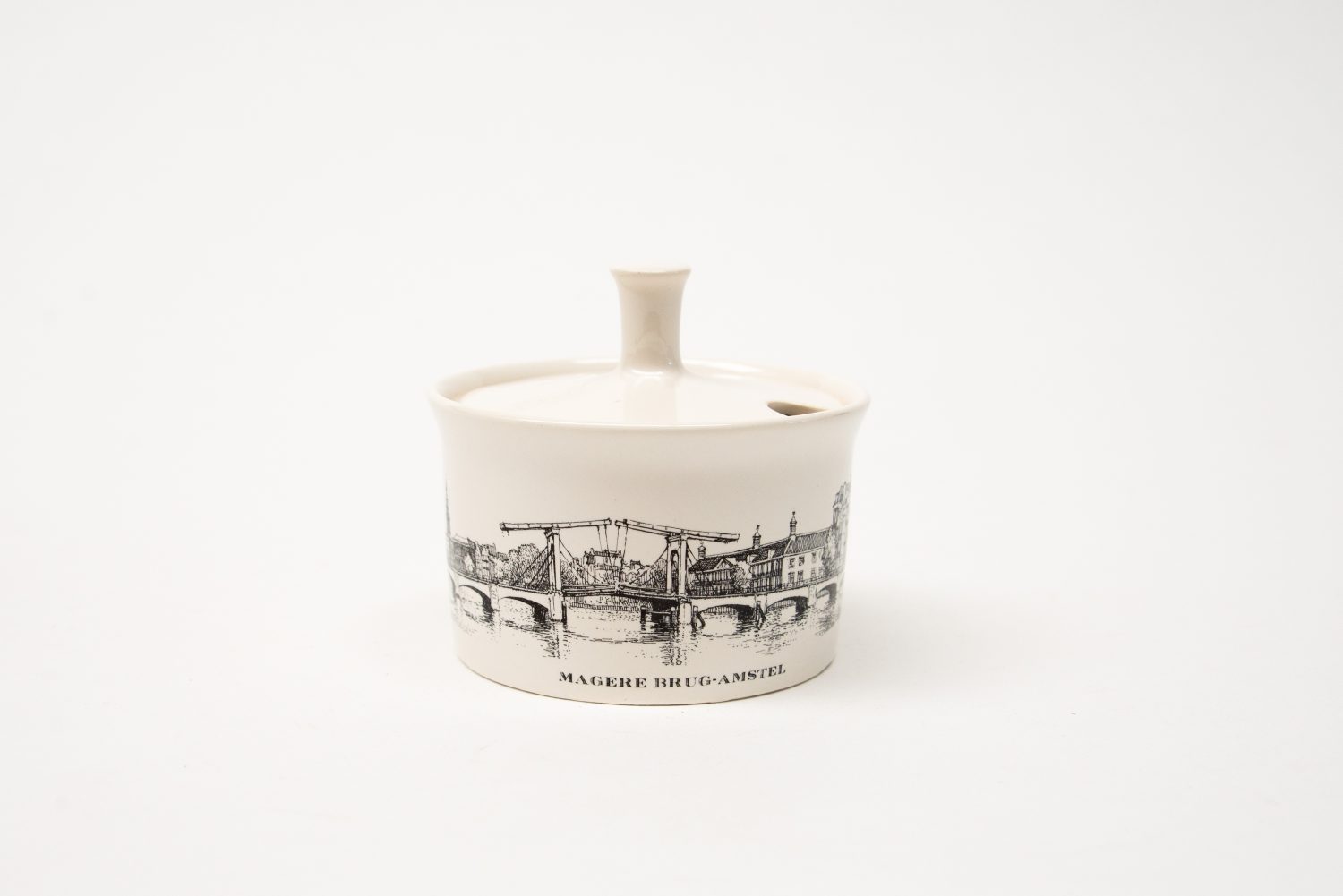
Villeroy and Boch, Canals of Amsterdam H E Roodenburg, 1960s.

H E Roodenburg (1895-1987) was a popular and well known Dutch Graphic Artist who became known for his cityscapes of Amsterdam, Rotterdam, Gorinchem and Utrecht.

In the 1960s Villeroy and Boch released a large breakfast service featuring Roodenburg’s black-and-white etchings of Amsterdam’s canals and buildings known as ‘Het Grachtenservies’ (‘The Canals of Amsterdam’).

The parchment white of the porcelain used really highlights the charming etchings which are different on each piece, and an incredible amount of detail is visible in each drawing. They are fascinating pieces to hold and study while being used.

Villeroy Boch, Canals of Amsterdam

Villeroy Boch, Canals of Amsterdam – Coffee Cups (originally with saucers). Photo Ray Garrod

Villeroy Boch, Canals of Amsterdam

Villeroy Boch, Canals of Amsterdam – Coffee Pot – Photo Ray Garrod

Villeroy Boch, Canals of Amsterdam

Villeroy Boch, Canals of Amsterdam – Photo Ray Garrod

Villeroy Boch, Canals of Amsterdam

Villeroy Boch, Canals of Amsterdam – Sugar Bowl – Photo Ray Garrod

Read more